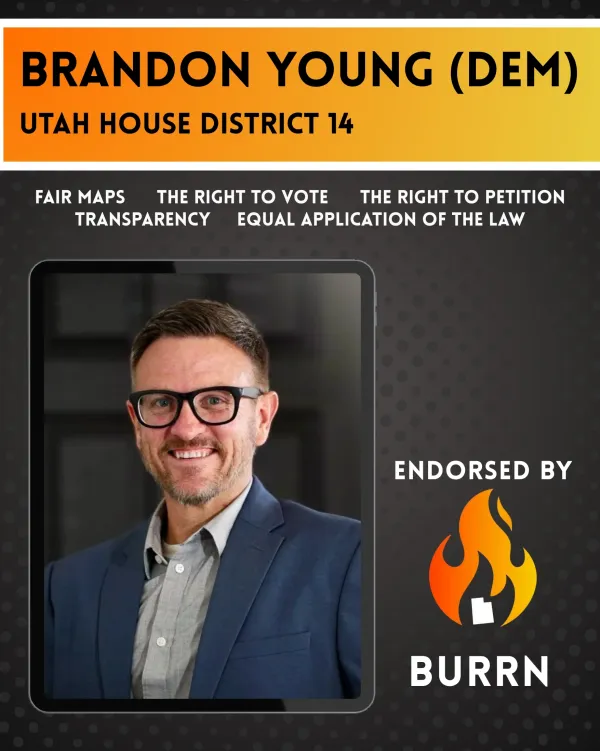
- Do you support or oppose the Independent Redistricting Commission and Standards Act that Utah voters approved in 2018? Please explain your reasoning.
- Support. Utah voters approved it to create a fairer, more transparent redistricting process. I believe elected officials should not be able to choose their voters. Redistricting should serve communities and voters, not politicians or political parties. I support strengthening the commission and respecting the intent of what Utah voters approved.
- What should happen when the legislature disagrees with a map the commission produces, and what would you do in that situation?
- If the Legislature disagrees with a map produced by the commission, the first step should be to understand why. There should be a transparent, public process where concerns are evaluated against the standards established for redistricting—not simply whether legislators like the political outcome.
- The Legislature has a constitutional role in redistricting, but that does not mean it should be able to disregard the principles voters approved. The goal should be fair representation, keeping communities together where possible, and drawing districts based on legitimate criteria rather than protecting incumbents or political parties.
- If elected, I would review any proposed map carefully, listen to constituents and the commission, examine the legal and demographic reasoning behind it, and make my decision based on what best serves the people of Utah, not what benefits my party or my own political interests.
- Ultimately, I believe elected officials should be accountable to voters, but voters should also be able to trust that their districts aren't being manipulated for political advantage. I would support a process that respects both the Legislature's constitutional responsibilities and the independent standards Utah voters approved.
- Do you support Utah's vote-by-mail system as it stands?
- Yes. I support Utah’s vote-by-mail system as it currently operates, although I believe there is room for improvement. We should strengthen safeguards and address gaps in the delivery process so voters can have confidence that their ballots arrive on time, are properly received, and are counted. No eligible voter should lose their opportunity to participate because of preventable problems with mail delivery or ballot processing.
- What would you do to encourage more people to vote who currently don't vote?
- The biggest reason I’ve heard from people who don’t vote is, “Voting doesn’t matter.” I believe that perception is one of the biggest barriers to participation, and it needs to be addressed directly.
- People need to see that their vote can influence the issues that affect their everyday lives. We need to engage them, listen to their concerns, explain what is at stake, and show them how their participation can make a difference. Ultimately, people are more likely to participate when they believe their voice is heard and their vote matters. Building that confidence should be a priority.
- Utah voters can put questions on the ballot through citizen initiatives and referenda. Should the threshold for passing them be changed? Why or why not?
- I do not support changing the threshold. If Utah voters meet the requirements to place an initiative or referendum on the ballot, the decision should ultimately rest with the voters. I believe a simple majority provides a clear and democratic standard while respecting the will of the people.
- What do you see as the relationship between transparency and corruption?
- Transparency is one of the strongest tools we have to prevent corruption. When government decisions, spending, and relationships are conducted openly, there is greater accountability and less opportunity for misconduct to go unnoticed. Transparency builds public trust and makes elected officials accountable to the people they serve.
- Does Utah's GRAMA support the public's right to know, or does it need strengthening? Or is it too stringent?
- I believe Utah’s GRAMA law supports the public’s right to know, but it could be strengthened. Transparency should be the default in government, not the exception. Reasonable protections for legitimate privacy and security concerns are important, but they should not become a shield for avoiding public accountability.
- Describe a specific action you would take in office to make sure every person in your district has equal access to government services and equal protection under the law, regardless of citizenship status.
- I would support legislation requiring state agencies to provide clear, consistent standards for accessing public services and prohibit discrimination based on citizenship status where state law does not require it. Government services should be administered fairly and consistently, with accountability when those standards are not followed.
- Is there anything else you think is relevant that our questions did not reach?
- I believe one issue that deserves greater attention is accountability. Fair representation is not just about how districts are drawn; it is also about making sure elected officials are transparent about their decisions, financial interests, and use of public resources. Voters deserve a government that works for them, not one that operates behind closed doors or puts political interests ahead of the public interest.